
MIS
Management Information System
The Management Information Systems (MIS) unit is the technological core of the GPSNP 2 project, responsible for designing, deploying, and managing the digital infrastructure that underpins all Productive Inclusion and Labour-Intensive Public Works activities. Its primary role is to ensure efficient, transparent, and data-driven project delivery.
The unit achieves these core functions through a suite of interconnected systems. Key functions include:
- System Development and Maintenance: The unit is responsible for designing, developing, and maintaining the core project software.The MIS unit currently manages the entire portfolio of project-specific software, which is divided into mobile applications for field data collection and web applications for centralized data processing. These systems include:
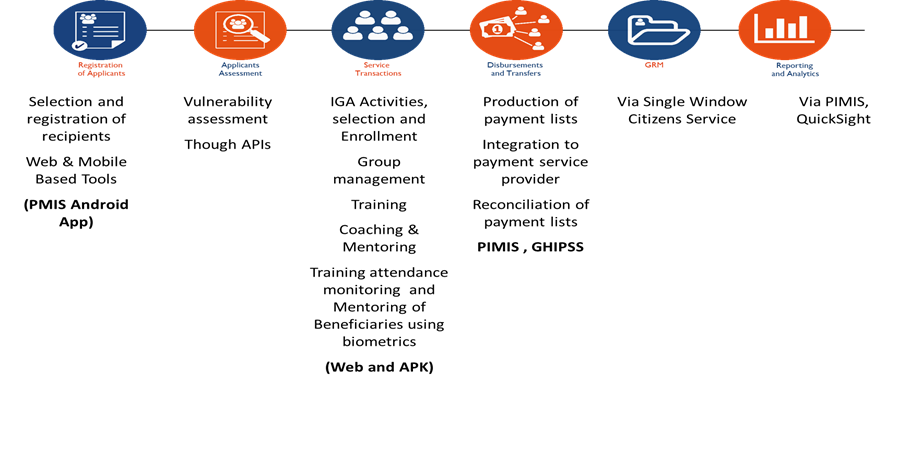
- PI Mobile App (APK): For collecting beneficiary information in the field.
- PI Web Application (PI MIS): For storing and processing PI data.
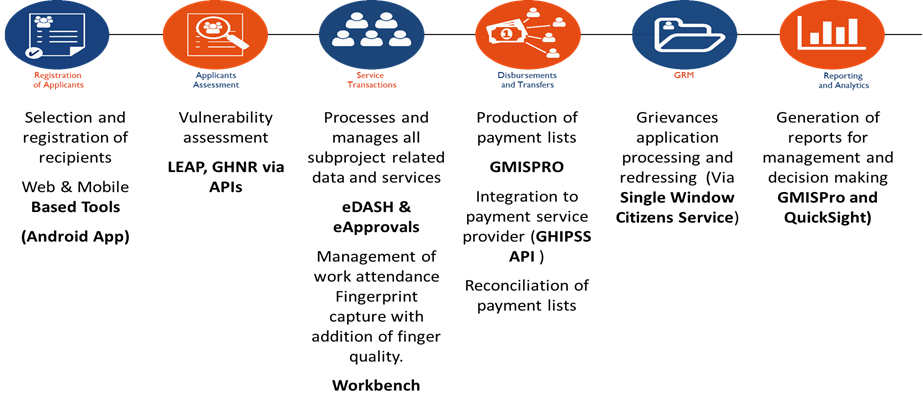
- LIPW Mobile App (EDASH): For capturing daily work attendance biometrically.
- LIPW Web App (GMIS Pro): The central hub for managing LIPW data, including payroll processing.
- Workbench: A web tool for District Assemblies to monitor LIPW attendance.
- QuickSights: A web and mobile reporting tool for easy access of project deliverables even on the go.
- Ensuring Data Integrity and Processing: The unit is responsible for the flow of information, where data collected by field teams via the mobile applications is securely transmitted and stored in the central web applications. This data is then processed and used for critical functions like payroll generation, monitoring progress, and informing management decisions.
- Facilitating Payments: The MIS unit oversees the crucial link between the project’s systems and the national payment platform, GHIPSS. This integration enables the reliable and timely electronic disbursement of funds to beneficiaries, whether through e-zwich cards or mobile money.
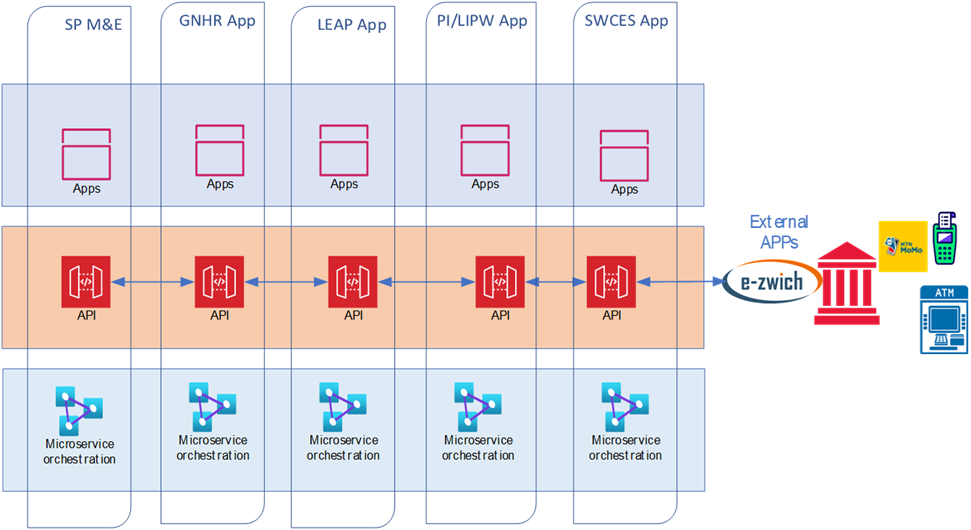
- Interoperability and Integration: A key role of the unit is to maintain secure connections (via APIs) with other vital government systems. This allows for real-time data verification and sharing with:
- LEAP: To validate beneficiary status.
- GNHR: To confirm household poverty levels.
- SWCES: To integrate the grievance redress mechanism.
- SP MEMIS: To coordinate with the broader social protection system.
- Reporting and Analytics: The MIS generates critical data for various project needs, including:
- Monitoring and Evaluation (M&E): Providing data to track performance indicators outlined in the project’s Results Framework.
- Management Decisions: Generating information for project leads to identify bottlenecks and make timely remedial actions.
- Project Reporting: Producing data for quarterly and annual progress reports.
- Capacity Building and User Support: The MIS Specialist is responsible for facilitating training for all staff at the national, zonal, and district levels—on how to use the MIS software and related electronic tools. They also provide back-up support and periodic updates to user manuals in use
- Infrastructure and Security: The MIS unit is responsible for the technical infrastructure that keeps the project running. It manages the hosting of all systems at the National Information Technology Agency (NITA) , ensuring robust security and high availability.
- IT Procurement Support: The unit assists the Procurement Specialist by providing detailed technical specifications for all IT equipment (computers, tablets, etc.) to be acquired for the project, ensuring they are fit-for-purpose and represent value for money.
Productive Inclusion MIS Workflow
Labour Intensive Public Works MIS Workflow
System Integration with Other Governmental Systems
Get In Touch
Institute of Local Government Studies (ILGS)P.O.BOX CT 3742
Call +233 302 770246
helpdesk@gpsnp.gov.gh
About Us
Financed By